500,000+ Customers Nationwide w/ 98.7% Satisfaction Rate
Lifetime Craftsmanship Warranty

500,000+ Customers Nationwide w/ 98.7% Satisfaction Rate
Lifetime Craftsmanship Warranty

JB Screen Printing & Embroidery brings more than 20 years of expertise to custom embroidery in New York City, helping brands, agencies, institutions, and organizations produce branded apparel and soft goods with a clean, elevated finish. From logo digitizing and thread color selection, to placement and final product, we approach embroidery with the same precision, consistency, and attention to detail that defines our broader apparel decoration work. Whether you are outfitting a team, launching branded merchandise, or developing corporate apparel, our goal is to deliver embroidery that reflects your standards as clearly as your logo.
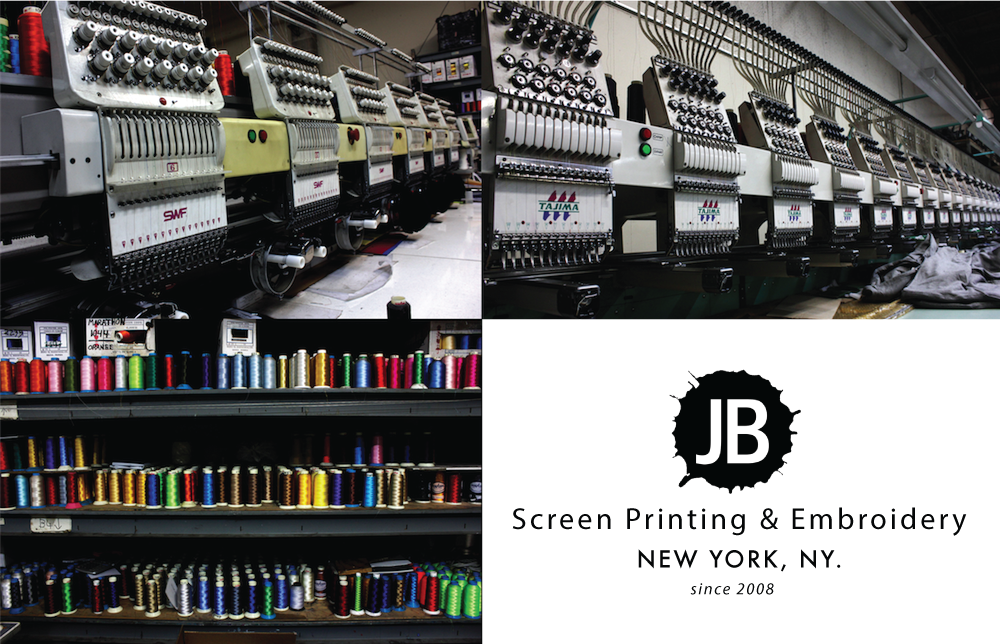

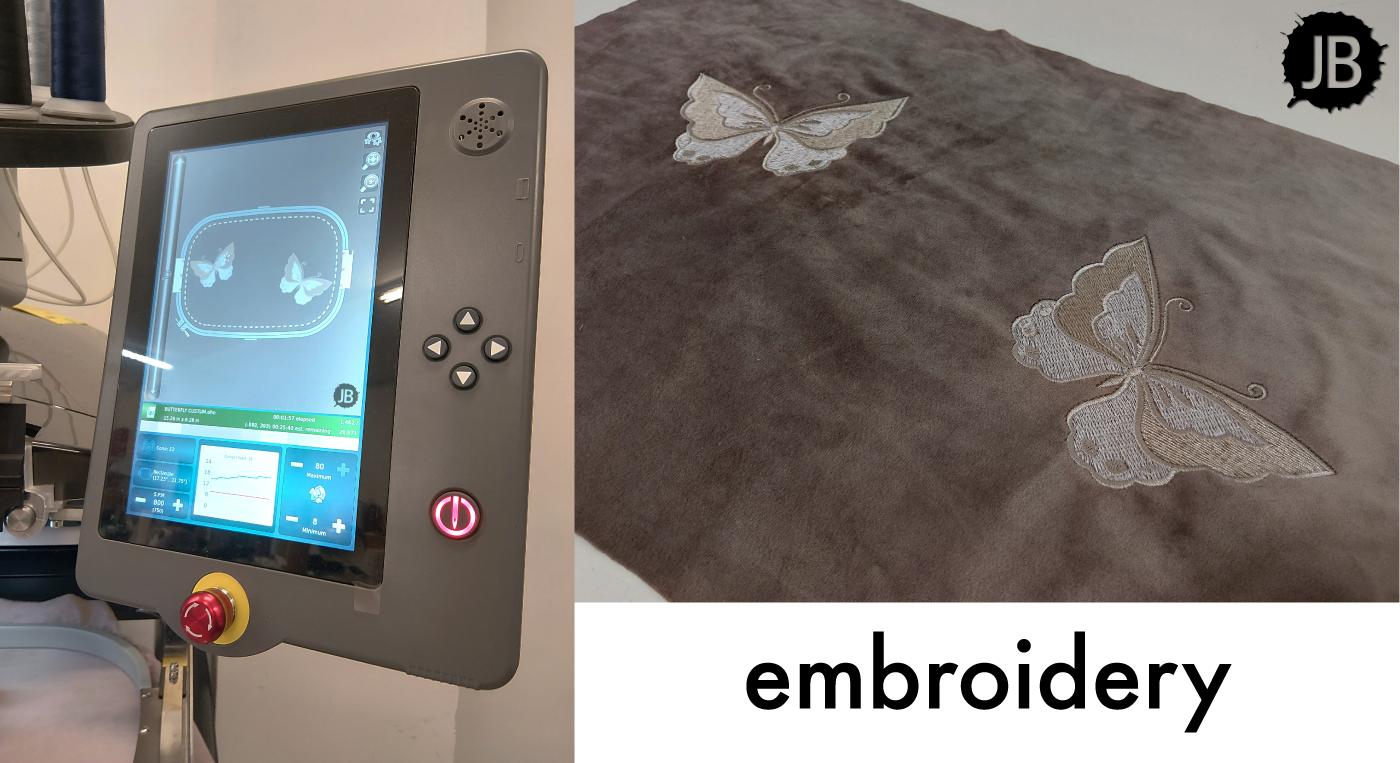
Most modern embroidery machines are computer controlled and specifically engineered for embroidery. Industrial and commercial embroidery machines and combination sewing-embroidery machines have a hopping on framing system that holds the framed area of fabric taut under the sewing needle and moves it automatically to create a design from a pre-programmed digital embroidery pattern.
Depending on its capabilities, the machine will require varying degrees of user input to read and sew embroidery designs. Sewing-embroidery machines generally have only one needle and require the user to change thread colors during the embroidery process. Multi-needle industrial machines are generally threaded prior to running the design and do not require re-threading. These machines require the user to input the correct color change sequence before beginning to embroider.
A multi-needle machine may consist of multiple sewing heads, each of which can sew the same design onto a separate garment concurrently. Such a machine might have 20 or more heads, each consisting of 15 or more needles. A head is usually capable of producing many special effects on fabrics, including satin-stitch embroidery, chain-stitch embroidery, Sequins, and Appliqueé.
JB Screen Printing & Embroidery uses Madeira USA's - High Quality Machine Embroidery Threads. Polyneon thread is constructed of a specially developed raw material which eliminates looping, puckering and virtually all thread breaks. Suitable for almost any embroidered application, Polyneon's unique formula makes this thread extremely durable and smooth running. Vibrant colors are glossy, shiny, as well as resistant to chlorine bleach, making Polyneon the ideal thread for embroidering on uniforms, safety garments and commercial linens.

Embroidery digitizing is the process of converting existing artwork like a company logo or team emblem into a stitch file that an embroidery machine can sew onto a garment. Before any design can be embroidered, it must be digitized. Digitizing is a complex process that is both art and science, and requires time and techinal acumen. This is where our expertise and craftsmanship come into play. Our fully staffed embroidery department is here to assist you in creating a flawless product.
Embroidering onto different fabrics, such as beanies, canvas materials, T-shirts, and caps, can produce varying results when the same logo is embroidered across multiple item types. The examples below show how different materials behave when thread is sewn into them. The following section reviews common embroidery applications with photo examples to help guide garment selection and logo design.
Tackle twill is durable in composition and is primarily used for embroidering names and numbers onto athletic garments due to its durability. The material is also used when manufacturing custom embroidered patches. Embroidery directly onto tackle twill yields a dense stitch and crisp finish because of the fabric's tight weave. Materials similar to tackle twill include canvas, nylon, and other fabrics with a dense weave structure.
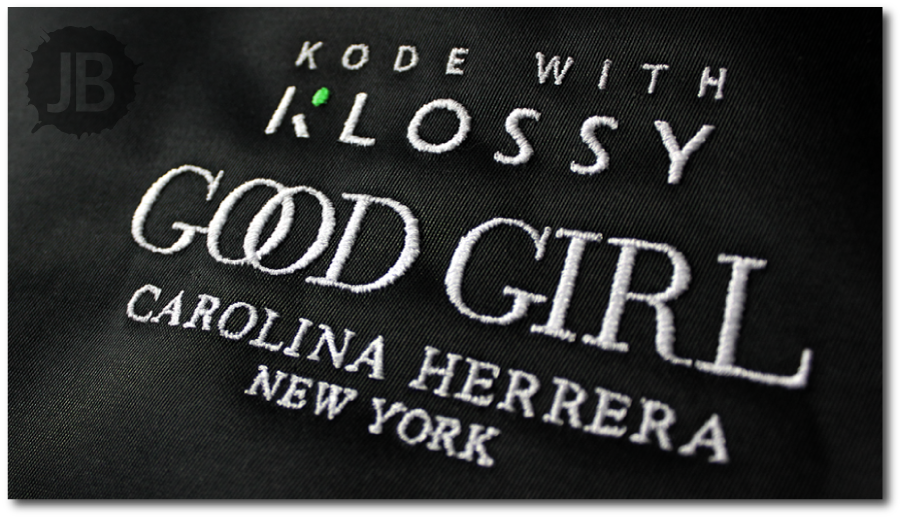
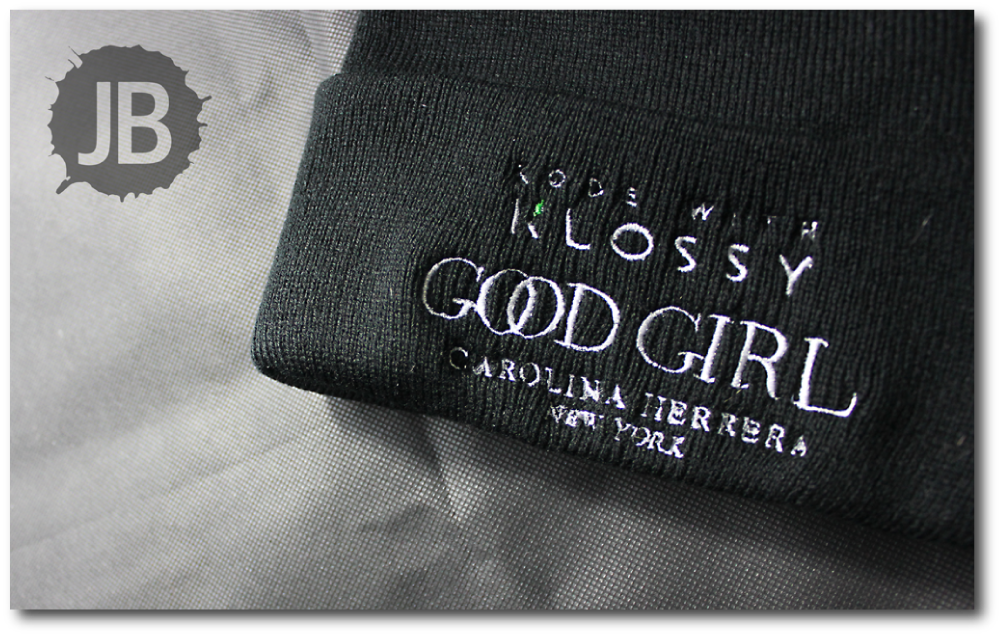
Beanies are porous by nature; therefore, artwork with too much negative space, as shown below, can result in a loss of quality when embroidered. Thread has a tendency to “disappear” when embroidered into a beanie, making small text difficult to render clearly. For this reason, it is best practice to design artwork or logos with more density. In some cases, a background may complement the aesthetics of the design and provide a stable base for embroidery. This allows the artwork to be embroidered on top of the background, resulting in greater stability and visual harmony.
EXAMPLE SHOWN TO ILLUSTRATE EMBROIDERY LIMITATIONS; NOT AN ACTUAL PRODUCT
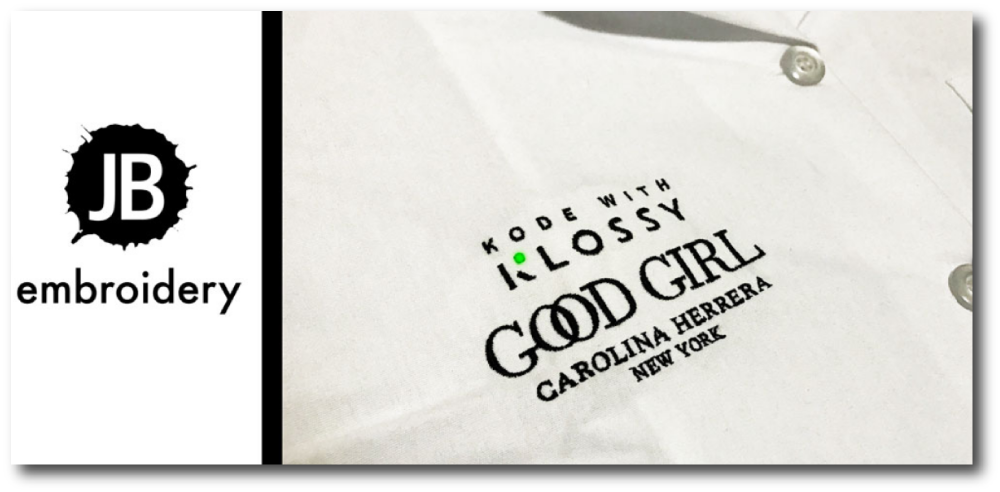
As shown in this production example, the client selected a button-up embroidered lab coat made from a heavier cotton fabric, allowing for a crisp, clean embroidery finish. If you are unsure how your artwork will render on a specific material or garment, please contact us so we can review both variables and determine the best production approach for your needs.
One common challenge we encounter when embroidering small text or artwork, especially designs that are 1" wide or less, is that the smaller the design becomes, the more difficult it is to retain sharpness, clarity, and detail.
When this occurs, we address it by selecting the appropriate thread weight and corresponding needle size. For example, 60-weight thread is finer than the industry-standard 40-weight thread, making it better suited for smaller details and tighter embroidery areas. When 60-weight thread is required, a smaller needle size is typically used in conjunction with it. We also closely review the embroidery digitizing process step by step to help ensure a clean, precise finish.
Text characters embroidered at 1" or 2" wide, or larger, generally produce a cleaner finish because the needle has more room to complete each detail. Larger embroidery areas allow for better stitch spacing, improved clarity, and a more robust finished appearance. For more complex production, such as custom-designed artwork, we look for the right balance between fabric, needle size, thread weight, and stabilizers while also considering the composition being embroidered, whether it is a logo, lettering, or a more detailed design.
As a general rule, we keep small text at no less than 6mm when possible. Sometimes, a character will need to be scaled down to 4mm or even 3mm; this depends on the typeface being embroidered. These measurements are extremely small, which is when we would implement a smaller needle so as not to puncture the fabric when attempting to stitch the openings of a typeface. For example, the letters Q, P, or O.
Take a look at the two examples shown below: a small embroidered Polo Ralph Lauren horse alongside the same horse embroidered at a larger scale. When comparing the two examples, you will notice details in the larger horse that do not appear in the smaller horse. For example, the straps surrounding the larger horse’s legs, along with the details in the rider’s knee pads, are not visible in the smaller embroidered example.
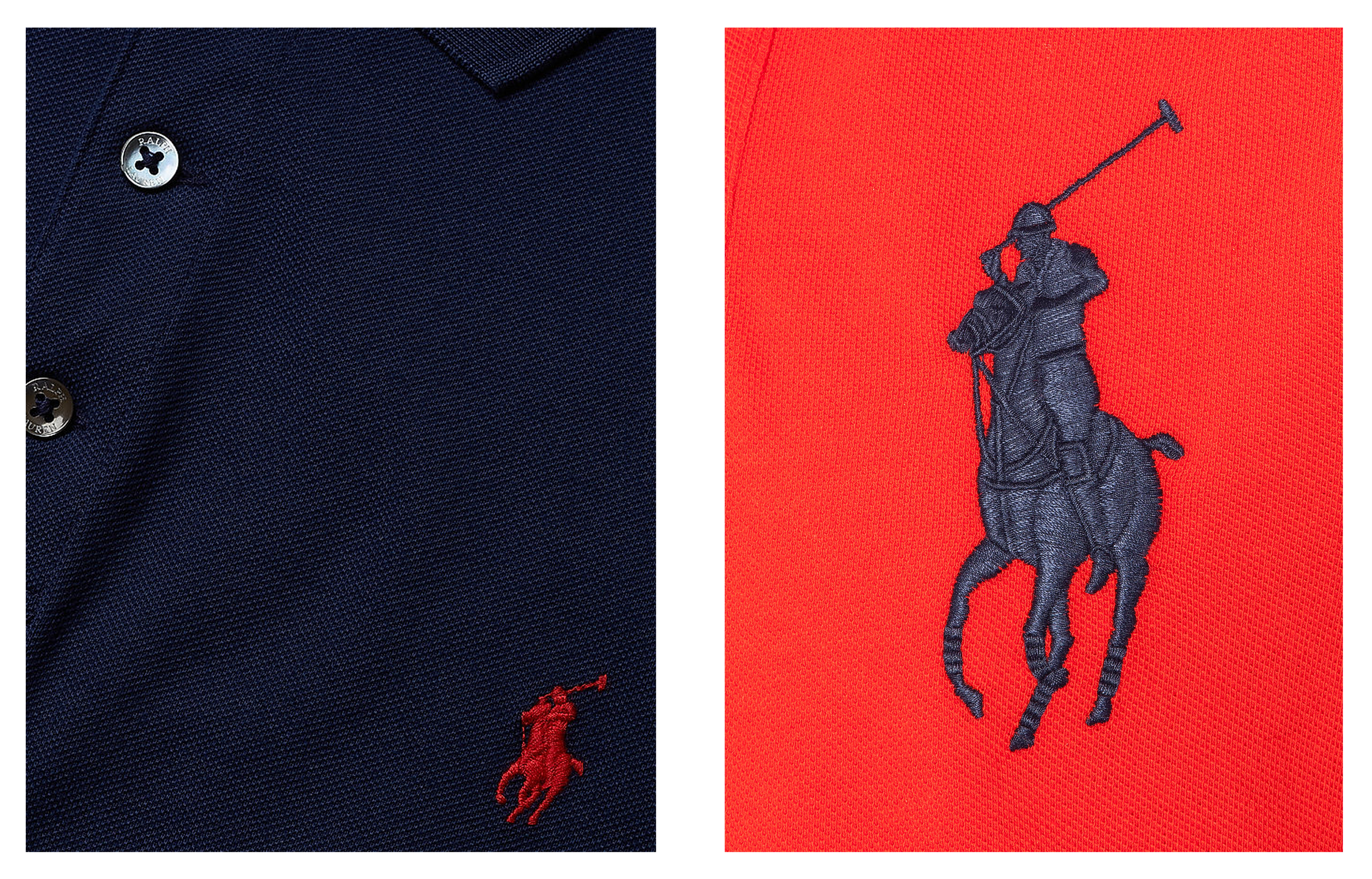
RALPH LAUREN AND RELATED MARKS ARE TRADEMARKS OF RALPH LAUREN CORPORATION.
Generally speaking, in embroidery, the smaller your artwork or text, the more detail and clarity you lose. The larger the overall design scale, the more detail and clarity can be retained. The same can be said for screen printing; however, the effects of scale are more noticeable when embroidering versusScreen Printing)
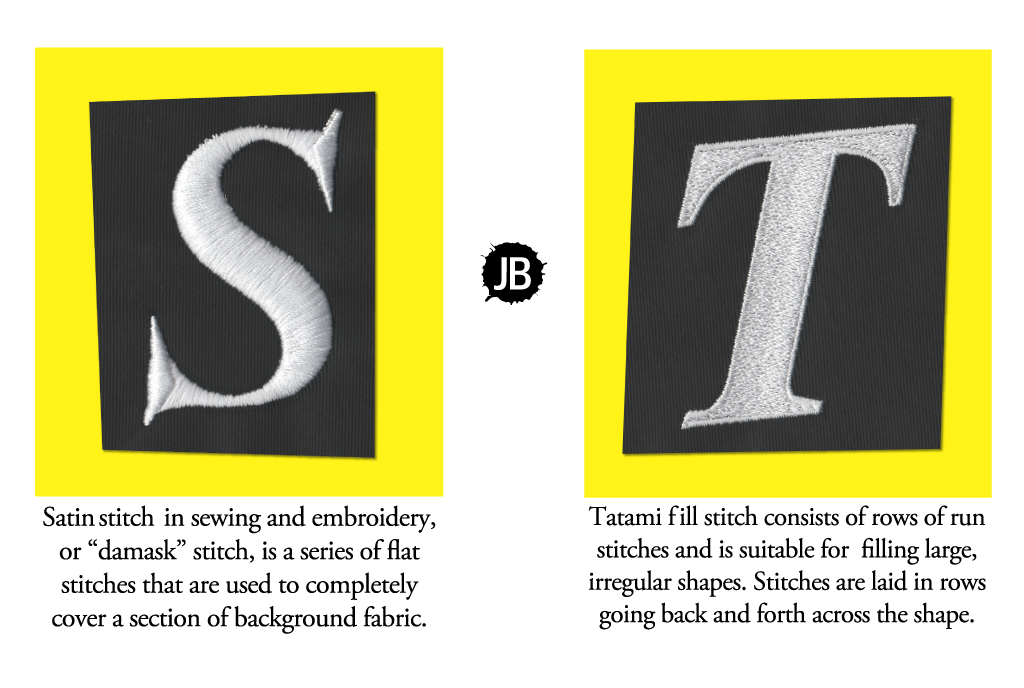
There are many different stitch patterns and techniques in machine embroidery; satin stitch and tatami stitch are two of the most commonly used types. A satin stitch is made up of a series of flat stitches that completely cover the area being embroidered, whereas a tatami stitch consists of rows of run stitches commonly used to fill large and irregular shapes.
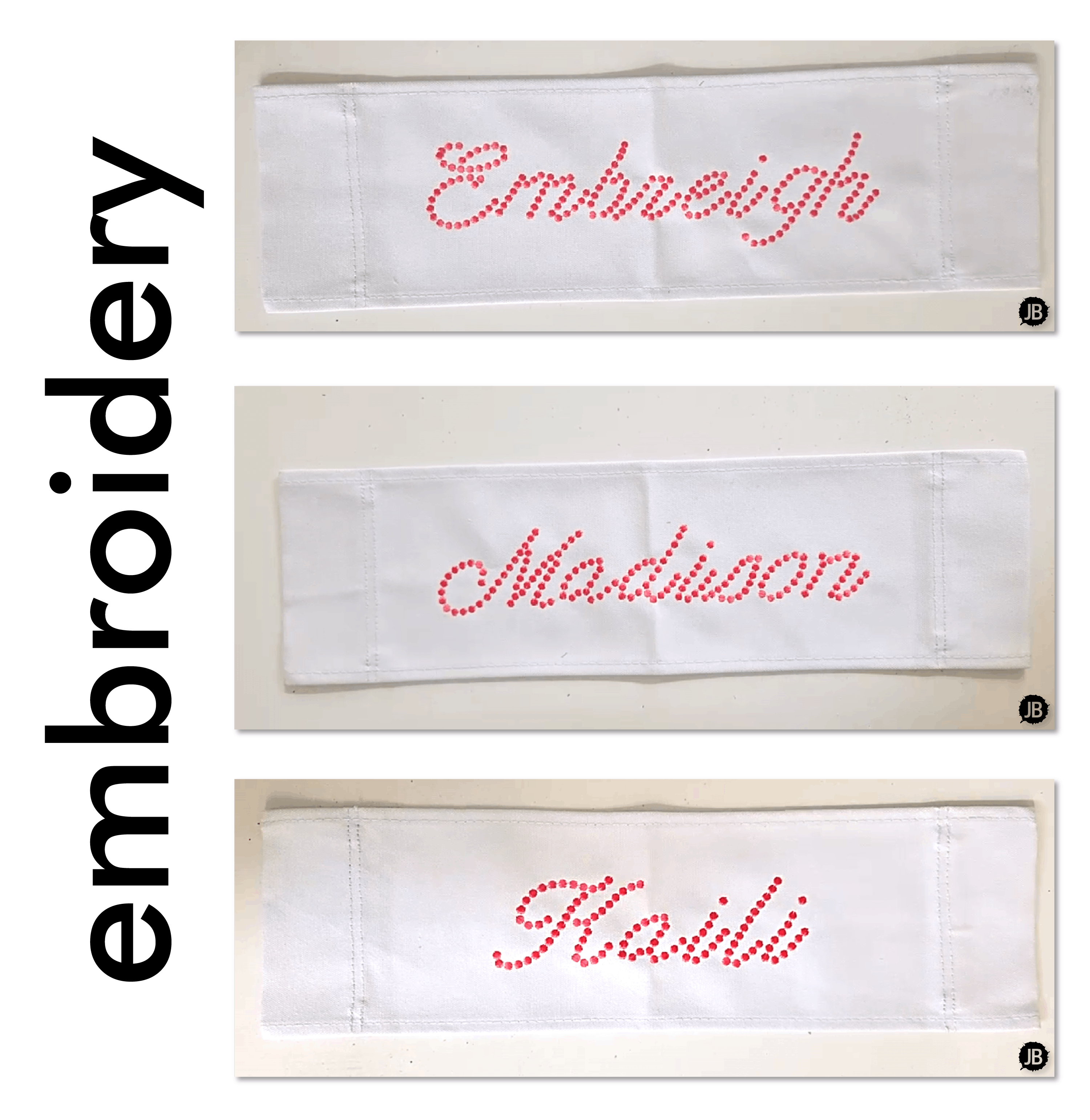
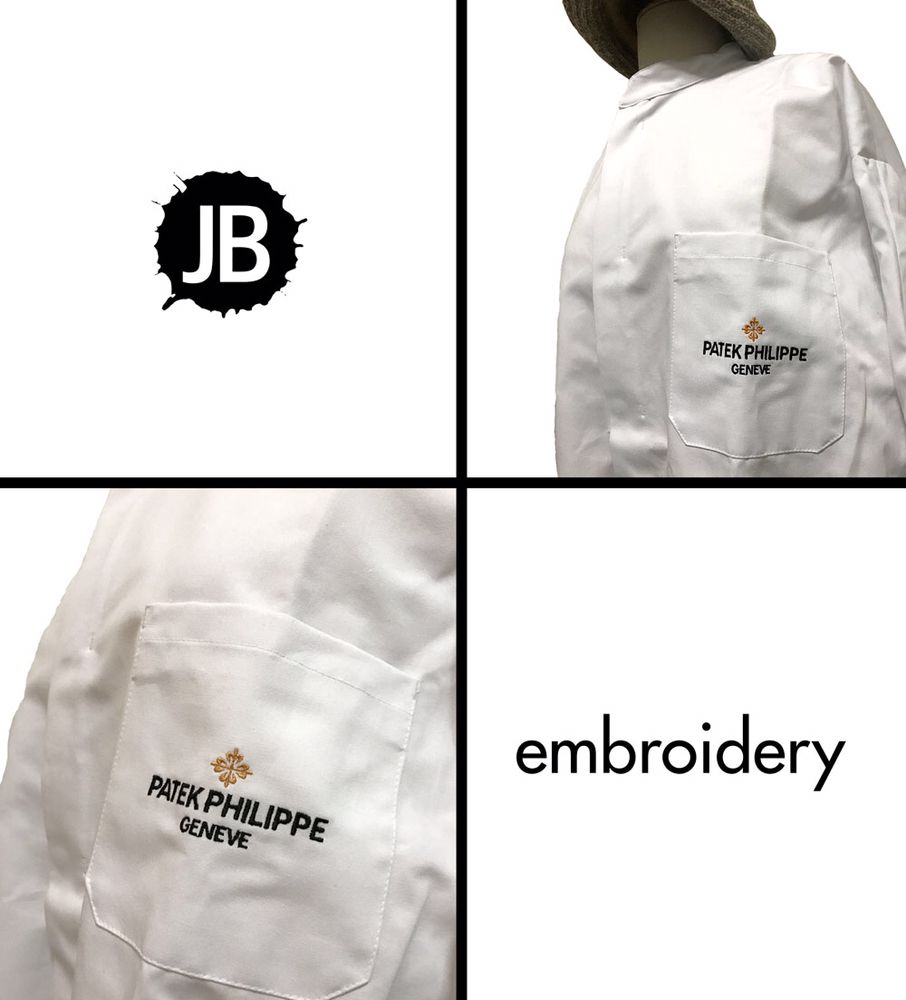
Your audience’s first impression involves a purely visual, aesthetic judgment. That is why every item we embroider is engineered from start to finish to be crisp, balanced, legible, and composed of clean stitch paths and finishes that hold up under real-world wear for years to come.
We work with Madeira USA's - High Quality Machine Embroidery Threads, and we offer thousands of high-quality color options. You can reference the thread color chart below when placing your order. If your're unsure which color works best, just ask, and a team member will help you narrow it down :)
Looking for a company that doesn't keep you up at night? You've come to the right place! With JB Screen Printing & Embroidery You can rest assured that when we commit to your production and due date, we will go above and beyond to meet the deadline on or ahead of schedule in addition to upholding our aggrement to you :)
For more information, please
email us at